
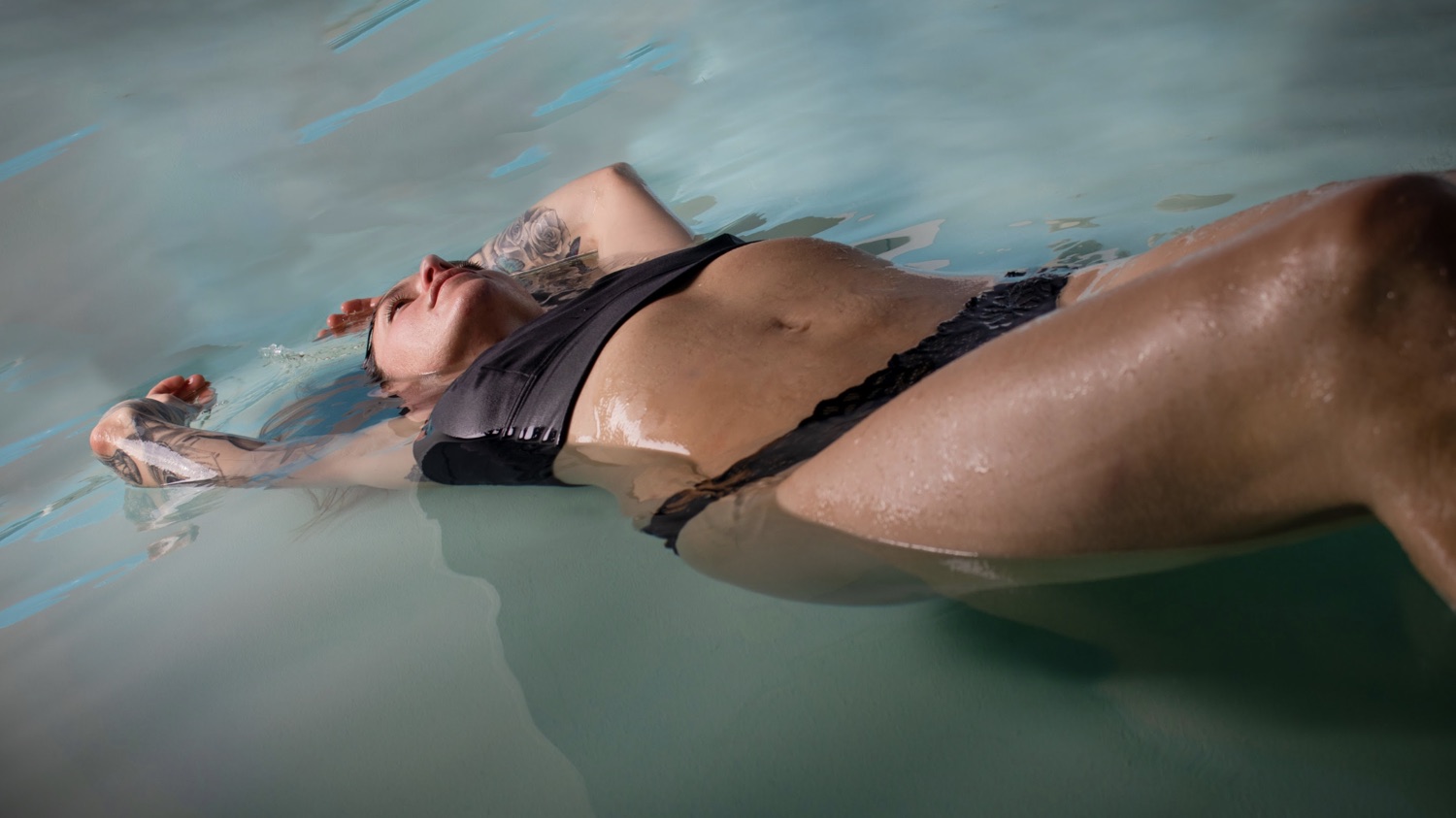
Most of us know the feeling of lying awake with a busy mind long after the lights are off. Sleep feels out of reach precisely when we most want it. What is often missing is not more effort but the opposite: a real chance for the nervous system to stand down.
What floatation therapy is
Floatation therapy — also called a float tank, isolation tank or sensory deprivation tank — means lying back in a private pod of skin-temperature water so dense with Epsom salt that you float without trying. Light and sound fade as much as you choose. The approach grew out of research into Restricted Environmental Stimulation Therapy (REST), first explored in the 1950s by the neuroscientist John C. Lilly.
Floatation is one of five treatments at Floatwell Cambridge, 500 m from the station — about floatation →
What happens in the pod
A float removes the inputs your brain spends all day processing. The body floats without effort, the room is quiet and dim, and the line between skin and water starts to blur. With so little to monitor, the nervous system tends to shift away from its alert, “fight or flight” state towards the slower state associated with rest and repair.
What the research suggests
Studies of floatation-REST have found that sessions can lower cortisol — the hormone most closely tied to stress — and reduce muscle tension, while people report feeling calmer afterwards. Trials have also found reductions in stress and anxiety scores after a course of floats. The research is still modest in size, so we describe these as promising findings rather than guarantees.
Sleep is where many of our regular guests notice the difference first. They often describe the night after a float as their deepest of the week.
Why it can help at night
Poor sleep is often a daytime problem: a stress response that never fully switches off. A float gives the body a clear signal of safety — warmth, weightlessness, quiet — and works a little like a rehearsal for the state you are trying to reach at bedtime. The more familiar that state becomes, the easier it is to find again on your own pillow.
Getting the most from your float
- Arrive well hydrated, and avoid caffeine for a few hours beforehand.
- Give yourself a few minutes to settle before you lie back.
- Try slow breathing for the first ten minutes, then stop doing anything at all.
- Leave the lid and light however you are most comfortable — you are always in control.
- Notice how you sleep that night and the next, so you can judge the difference for yourself.
Making it a habit
One float is a lovely experience; a rhythm of floats is a practice. Start with a single session, or our three floats in three days, and notice how you sleep. If it helps, a membership makes the reset part of your month rather than a one-off treat.