
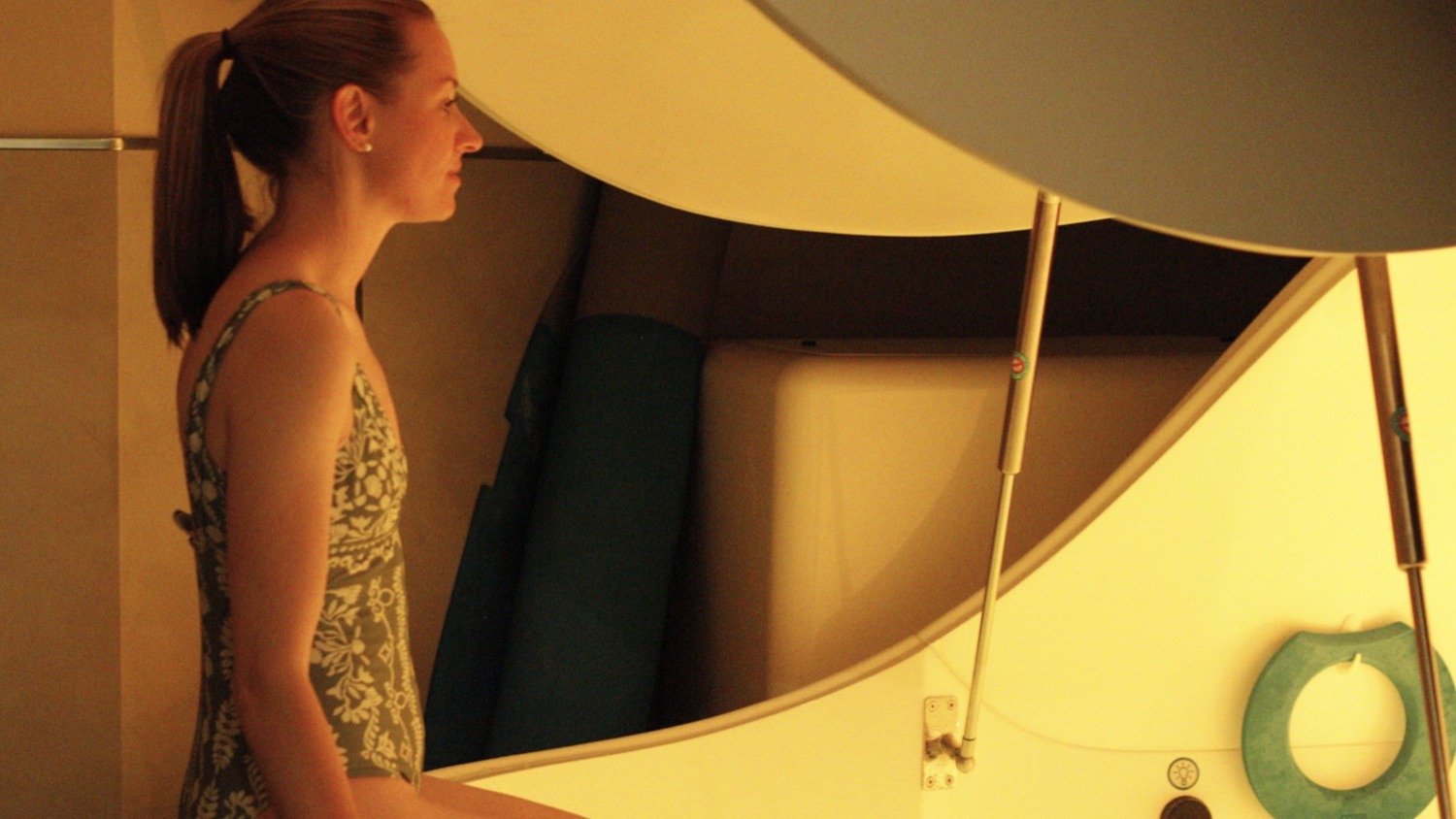
Booking your first float often comes with a small flutter of questions. What do I bring? What actually happens in there? Will I get bored, or worse, feel shut in? Here is a gentle walkthrough of the whole experience, so you can arrive with nothing to think about — which is rather the point.
Before you arrive
There is very little to prepare. Skip caffeine for a few hours beforehand if you can, avoid shaving the same day (salt water will let you know about any fresh nicks), and eat lightly rather than arriving hungry or full. You do not need a swimsuit — you float in private, and most people float without one. Everything else, from towels to earplugs, is provided.
Floatation is one of five treatments at Floatwell Cambridge, 500 m from the station — about floatation →
Arrival and settling in
When you arrive, a member of the team will show you to your private room and talk you through everything at an unhurried pace. You will have your own float pod, shower and space to change. First-timers are never rushed; if you have questions, this is the moment to ask them all.
Earplugs, shower, and stepping in
Earplugs go in first, before your shower — they seal better in dry ears and keep the salt water out. Then a quick rinse to remove oils, lotions and hair products, which helps keep the water pristine. Step into the pod and you will find the water is warm — kept close to skin temperature — and so dense with Epsom salt that floating takes no effort at all. You could not sink if you tried.
What about claustrophobia?
This is the most common worry, and an understandable one. In practice, the experience is more like floating in outer space than being shut in a box. You are always in control: the pod is never locked, you can keep it open as wide as you like, and you can leave a soft light on for as long as you want it. Most people who arrive apprehensive find that within a few minutes the walls simply stop mattering — with nothing to see and nothing pressing on the skin, the sense of enclosure tends to dissolve into a feeling of open, weightless space.
The hour itself
The first ten minutes or so are usually about arriving. Your mind may chatter; your body may fidget as it works out that it genuinely does not need to hold itself up. Let it. Gentle music often eases you in before fading to silence, and there is no technique required — no posture to hold, nothing to get right. Some people drift into a dreamlike state between waking and sleep; studies suggest this reduced-stimulation environment helps the nervous system shift towards its rest-and-repair state. If your thoughts wander, that is fine too. There is no wrong way to float.
Afterwards
Soft light and music return to let you know the session is ending. Take your time: shower off the salt, get dressed slowly, and enjoy a few quiet minutes before heading back out. Many floaters describe a distinct post-float calm — colours a little brighter, shoulders a little lower — that can linger for hours, and some report sleeping especially well that night.
Your first float is mostly about letting go of the idea that you need to do anything at all. The water holds you; the rest tends to take care of itself.