

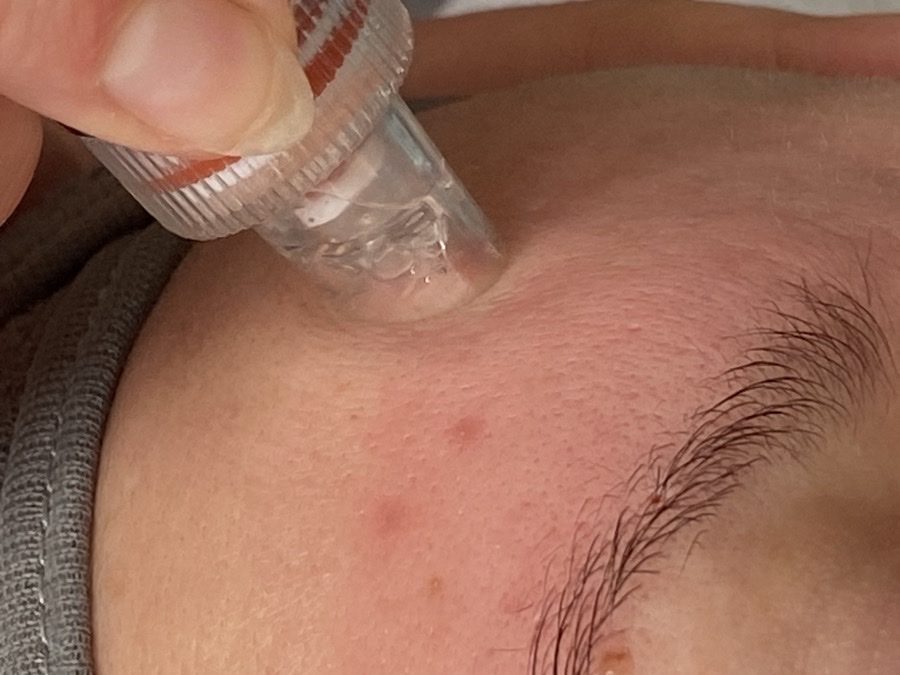
The extraction step clears congestion and many people see an improvement in breakouts. It is not a treatment for acne as a medical condition — for that, see a GP or dermatologist.
Where it genuinely helps
Much of what people call “breakouts” is congestion: blocked pores, blackheads, small bumps under the surface, an uneven texture across the forehead, nose and chin. That responds well. The treatment lifts debris out of the pores rather than pushing it around, and the hydration step afterwards matters more than people expect — dehydrated skin often overproduces oil, which makes congestion worse.
Our three skin case studies include acne-prone skin, and they show how a treatment is adjusted rather than applied to a formula.
Skincare is one of five treatments at Floatwell Cambridge, 500 m from the station — about skincare →
Where it does not
Acne as a medical condition — persistent, inflamed, cystic, painful, or leaving scarring — is a clinical problem with clinical treatments. No facial will resolve it, and anywhere that tells you otherwise is taking your money. If that is what you are dealing with, see a GP or dermatologist. We say this plainly because people spend a great deal on facials trying to treat something that needs a prescription.
Working alongside treatment
If you are already under a GP or dermatologist, tell us when you book and tell your therapist at the consultation. Prescription skincare changes what we can safely use.
- Oral isotretinoin (Roaccutane). We will not treat you during a course, and generally not for six months afterwards. Skin is too fragile.
- Topical retinoids. Stop a couple of days beforehand, as with any retinoid.
- Benzoyl peroxide or prescription acids. Mention them. They change the exfoliation step.
- Antibiotics for acne. Usually fine, but tell us.
If you do book
Expect improvement in texture and congestion rather than the disappearance of active, inflamed spots. A single treatment helps; a short course followed by monthly maintenance helps considerably more. Your therapist will suggest a plan after seeing your skin, not before.
One honest caution: some people experience a brief period of skin clearing out in the week after a first treatment. It settles, and it is more common on congested skin.